
Diesel: The $5.64 Wake-Up Call for Beverage Packaging

The US Energy Information Administration forecast diesel at $3.47 per gallon for 2026. It hit $5.64 the week of May 4. That $2.17 gap — a 63% miss on projections — is the Strait of Hormuz crisis landing directly on the freight bills, material invoices, and margin calculations of every capsule, closure, and can supplier in the US market. And it’s showing up every single week.
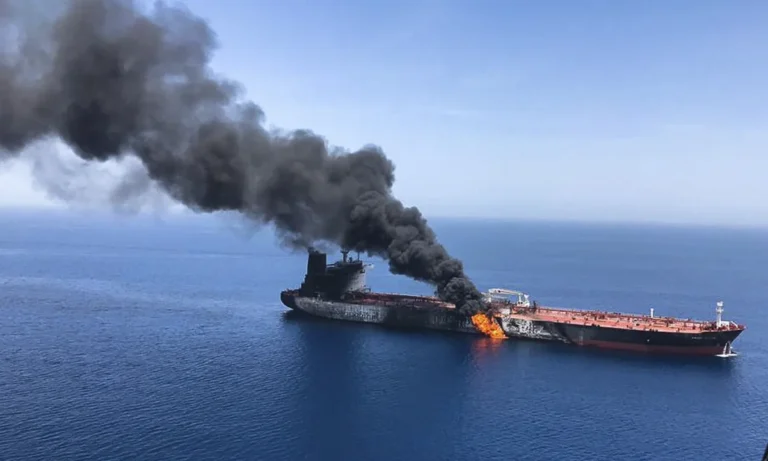
Iran effectively closed the strait on February 28, 2026, following US and Israeli airstrikes. Since May 6, transits have fallen to near zero — a waterway that previously handled about 3,000 commercial vessel crossings per month now sits at roughly 5% of normal traffic. More than 1,550 vessels are stranded and 22,500 mariners trapped. A ceasefire on April 8 collapsed within 24 hours. Iran’s IRGC has since redefined the strait as a “vast operational area” — a French container ship was attacked in early May — and Lloyd’s List editor Richard Meade has said that even an immediate reopening would take until at least September to normalize markets.
For capsule, closure, and can suppliers, this is not a background macro story. It is hitting your three core cost lines simultaneously: raw material inputs, domestic freight, and customer pricing power. Here is what each looks like right now.
Your Raw Materials Are in the Middle of This
The Strait of Hormuz is not just an oil route. It carries significant volumes of aluminum, petrochemical feedstocks, and Gulf Cooperation Council metals — and the closure has sent prices spiking across the exact materials that capsule, closure, and can manufacturers depend on.
Aluminum is the sharpest pain point for this industry. London Metal Exchange aluminum has surged more than 13% since the February 28 strikes on Iran, and is up around 19% for 2026 as a whole — its highest levels since 2022. Bernstein analyst Bob Brackett attributes the spike directly to the Hormuz shutdown, estimating that 7% of the world’s aluminum is sourced from the region, with military strikes having taken roughly 3% of global supply off the market. Power accounts for approximately 40% of aluminum smelting costs, and energy prices have risen sharply alongside the oil disruption, compounding the squeeze. The Midwest Premium — the additional charge applied to aluminum delivered to the US heartland — was up 186.5% year over year as of April 2026, according to S&P Global Energy. For aluminum capsule and can suppliers, that is not an abstraction — it is the cost of your primary input material.
PVC and polylaminate materials are equally exposed. Plastic packaging costs have jumped approximately 20% as petroleum-based feedstocks tighten. Polylaminate capsules — constructed from layers of aluminum and polyethylene — face pressure on both components simultaneously. Legal analysis from Sidley Austin is explicit on this point: plastic packaging producers reliant on PVC or polyethylene are vulnerable when input costs rise faster than customer repricing, with pass-through clauses often lagging weeks or months and creating margin compression in the gap.
This is not a downstream issue. It is landing on the factory floor right now.
Your Freight Bills Have Permanently Shifted
The fuel cost surge has translated into specific, stacking surcharge actions from every carrier in the domestic freight network — and some of the increases are structural, not temporary.
UPS fuel surcharges for domestic ground shipments have risen over 6% since the start of 2026, and 11% for domestic air services. Critically, UPS has also raised the floor on its surcharge table — meaning even when fuel prices eventually come down, customers will still be paying more than before the crisis. FedEx’s ground surcharge hit 27% in late April. Amazon added a 3.5% fuel and logistics surcharge with no stated end date. And the US Postal Service implemented its first-ever 8% fuel surcharge on parcel shipments, running through January 2027 — a carrier that had never applied such a charge in its history.
For trucking, the American Trucking Research Institute benchmarks fuel at about 21% of total operating cost per mile. “Fuel surcharges are updated weekly, so higher diesel at the pump is immediately passed on,” according to John Lash, GVP of Product Strategy at e2open, with some long-distance lanes now eating so deeply into margins they’ve become uneconomical. For capsule and closure suppliers shipping product to wineries, distilleries, and breweries across the country, every truckload is repriced against a fuel benchmark that is running 63% above forecast.
Mainfreight’s May logistics advisory notes that US diesel tracked from $3.53/gallon at the start of the period to $5.64 by early May, with the April 2026 EIA Short Term Energy Outlook now forecasting a full-year 2026 average of $4.80/gallon — a figure already looking conservative given May’s trajectory. If your freight contracts or customer pricing were built on pre-war assumptions, they do not reflect the market you are operating in today.
The Can Market Is Caught in a Double Squeeze
For suppliers serving the rapidly growing canned wine and spirits segment, the Hormuz crisis arrives on top of an aluminum cost environment that was already under severe pressure from Section 232 tariffs — and the combination is acute.
The Midwest Premium for aluminum was up 186.5% year over year in April, with UBS cutting its 2026 aluminum supply growth forecast from 2.4% to 0.3%, citing Middle East disruption and limited European capacity. Craft beverage producers have seen can price increases ranging from 8% to as much as 30%, and canning line equipment parts — many imported — have seen similar tariff-driven spikes. At one Minnesota brewery, a $12,000 machine part became a $20,000 part, pushing maintenance costs into the six figures.
Despite the cost pressure, demand for canned wine and spirits is not softening. Crown Holdings reports that 75% of new drink launches now choose cans for North American rollouts, with energy drinks, spiked seltzers, and canned wine all driving filling line utilization higher. The Brewers Association notes that the glass price premium over aluminum has shrunk, and switching costs — given how many producers have invested in their own canning lines — mean the shift to cans is structural, not cyclical. Can suppliers are therefore in a position of rising demand meeting rising input costs, with the Hormuz crisis having accelerated both sides of that equation.
What To Do Right Now
Three actions are directly within your control, regardless of how long the strait remains disrupted.
Reprice against current inputs, not contract assumptions. The 20% spike in petroleum-derived materials and the 19% aluminum surge are not temporary aberrations to absorb quietly. Customer contracts written before February 28 are mispriced. The pass-through conversation is overdue, and the data — diesel at $5.64, Midwest Premium up 186.5%, plastic inputs up 20% — gives you the factual foundation to have it. Delay compounds the margin damage.
Consolidate shipments immediately. Mainfreight’s logistics advisory recommends consolidating shipments, reducing dimensional weight, and maintaining consistent shipping patterns to minimize fuel surcharge exposure. For capsule and closure suppliers, this is the fastest lever available. Every split shipment at a 27% FedEx fuel surcharge is a cost that consolidation would eliminate.
Get ahead of neck-finish specification changes. As producers across the wine and spirits industry respond to their own cost pressures by shifting to lighter bottle formats and redesigned closures, capsule and closure specs will change. Skirt lengths, application torque, and neck tolerances are all in motion. The Bottle Weight Accord now covers more than 2 billion bottles annually — that’s a large portion of your customer base actively redesigning their package. Suppliers who engage proactively on specification changes become partners in that process. Those who wait become reactive.
The Capsule Still Carries the Premium Signal
One concern worth addressing directly: as producers tighten packaging costs across the board, is there a risk that capsule and closure quality gets traded down?
The evidence suggests the opposite. As lighter bottles and leaner package formats become the norm, the capsule and closure increasingly carry the full weight of premium brand identity — literally the most tactile point of contact a consumer has with the product. Brands are already investing in custom embossing, surface treatments, and tactile finishes to differentiate on feel rather than bottle mass. A well-specified capsule on a cost-optimized bottle does more branding work, not less. For suppliers who can offer design sophistication alongside cost efficiency, the current environment is a commercial opportunity, not just a headwind.
Plan for Sustained Volatility, Not a Quick Fix
The structural lesson of the past three months is that fuel and material cost volatility is now a permanent operating condition for this industry. Even if the Strait of Hormuz reopened today, Lloyd’s List estimates markets would not normalize until at least September — and the metals crisis is expected to outlast any ceasefire by six to eighteen months, as smelters take weeks to safely restart and downstream manufacturers who have diversified supply won’t immediately revert.
The Hormuz crisis did not create the cost pressures facing capsule, closure, and can suppliers. It removed every remaining reason to delay acting on them.
About Capsules and Closures
Capsules & Closures, LLC is a leading U.S.-based supplier of lids, crowns, closures, bar tops, cans, and capsules for the food and beverage industry. For questions on sourcing, pricing, or market conditions, contact Capsules & Closures directly.