
Your Closure Is Talking About Your Brand. Is It Saying the Right Thing?
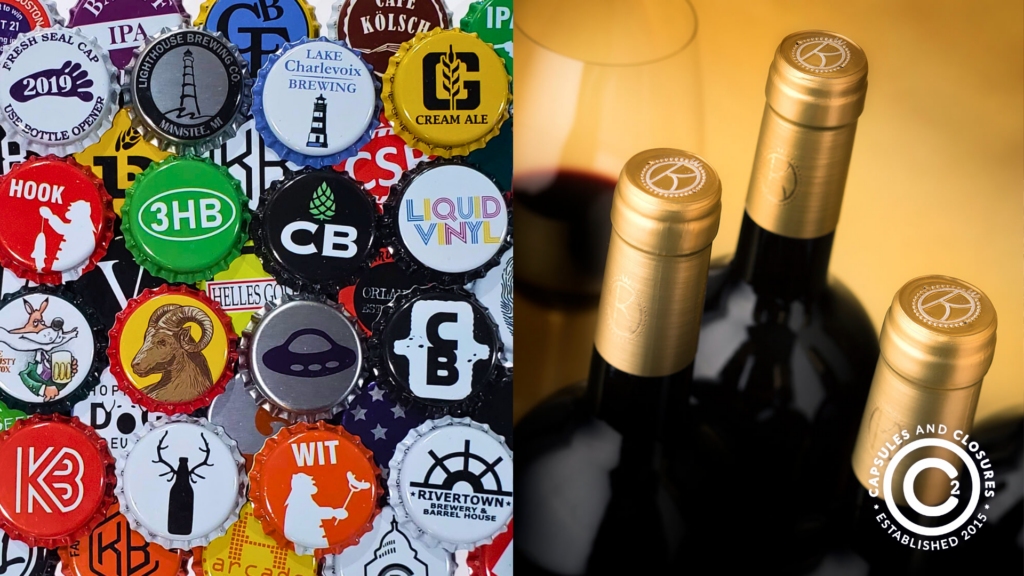
In a competitive retail environment, the right closure doesn’t just seal a bottle — it builds brand equity, drives purchase decisions, and turns first-time buyers into lifelong advocates.
The shelf is a battleground. In any given wine aisle, spirits section, or craft beer fridge, a consumer is making a purchase decision in under ten seconds — often with no prior knowledge of the brand in front of them, guided entirely by what they see, feel, and infer from the packaging. And in that moment, the closure is doing more work than almost any other element of the pack.
As we explored in Beverage Demand Is Changing — And Packaging Is Too, the forces reshaping the beverage industry — moderation trends, premiumization, the growth of health and wellness formats, and increasing SKU fragmentation — are simultaneously raising the bar on what packaging needs to communicate at the point of sale. Brands that treat closures and capsules as commodity components are leaving brand equity on the table.
The numbers back this up. According to Ipsos research cited by Outshinery, 72% of U.S. wine consumers say that label and packaging design directly influences their purchase decision. A study published by the American Association of Wine Economists found that U.S. consumers are willing to pay, on average, 8% more for a wine bottle with a cork closure versus a screw cap. And research on alcohol packaging’s influence on shelf standout confirms that packaging shapes not just purchase decisions but consumers’ entire lived experience of a product.
For brand owners and packaging managers in wine, spirits, and craft beer, understanding the commercial power of closure and capsule choice is not a luxury — it is a competitive necessity. The brands winning on shelf are the ones who’ve stopped treating closures as commodity components and started treating them as strategic brand assets.
A consumer who can’t pick up your bottle doesn’t know what’s inside. The closure is the part of the pack that reaches out first.
The 10-Second Shelf Decision: What Packaging Communicates Before the Label Is Read
Before a consumer reads your label, checks the vintage, or looks at the ABV, they register the overall visual impression of the bottle. Closure type and finish are central to that first impression — they either anchor the visual story your label and bottle shape are telling, or they create dissonance that erodes it.
Research on consumer behavior and packaging in the beverage category confirms that physical attributes — color, texture, and shape — draw initial attention before consumers even begin evaluating brand and product information. The closure is among the first physical attributes registered. Consider the immediate signals each closure type sends:
- A natural cork top with a branded capsule in deep burgundy foil communicates tradition, craft, and the timeless ritual of opening something special
- A clean, matte screw cap in satin silver or custom color communicates modernity, practicality, and honest confidence in the product quality
- A wax dip seal in an unusual color communicates exclusivity, artisanship, and deliberate differentiation — this producer is not following the crowd
- A decorative cork cage on a sparkling wine communicates celebration, occasion, and anticipation — the closure itself signals what this moment is for
None of these signals is inherently superior. The right choice is the one that’s true to your brand positioning and resonant with your target consumer. The mistake is choosing by default — or by what the rest of your category does — rather than by deliberate brand intention.
Capsules: The Underused Brand Canvas in Wine and Spirits Packaging
If closures are undervalued as brand assets, capsules are even more so. Positioned between the bottle neck and the closure, the capsule is visible on shelf, during service, and throughout the opening ritual — yet many brands treat it as little more than a tamper-evidence requirement. The most commercially successful brands in premium wine and spirits treat the capsule as a precise brand communication surface.
Foil Capsules: Reflective Prestige on the Shelf
Aluminium foil capsules remain the category standard in premium wine and spirits for good reason. The reflective surface catches light on shelf, takes print and emboss detail beautifully, and communicates quality to the hand before it reaches the eye. Within foil, the spectrum of executions is broad — from high-gloss metallics that read as opulent, to matte anodised finishes that feel restrained and contemporary, to two-tone combinations that add visual complexity with precision.
Embossed crests, brand names, or vintage details on the capsule crown are finishing touches that premium consumers notice and remember — even if they couldn’t articulate exactly why they reached for one bottle over another.
Tin and Polylaminate Capsules: Durability and Design Freedom for Spirits
For spirits applications — and wines where neck finish protection during transit is a priority — tin capsules and polylaminate constructions offer enhanced durability alongside excellent printability. The slightly thicker gauge delivers a more substantial hand-feel: an important sensory cue in premium spirits where the tactile experience of the bottle is integral to the brand communication.
Custom color matching to brand palettes is readily achievable in both materials, allowing capsule color to become a true brand identifier — as distinctive and ownable as your label design.
Heat Shrink Sleeves: Contemporary Versatility for Standing Out
Heat shrink sleeves now offer a compelling combination of 360-degree print area, complex shape conformity, and striking visual effects not achievable with traditional foil or tin. For craft beer and cider brands where differentiation on a crowded shelf is existential, a full-neck sleeve in vivid print creates standout that conventional capsule formats cannot match. The beer packaging market is projected to reach USD 33.9 billion by 2033, driven in large part by craft brewers’ emphasis on packaging as a primary brand differentiation tool — and North America leads this market growth.
The brands that win on shelf are not always those with the best product — they are those that communicate the best product most convincingly at the moment of decision.
Closure Type as a Brand Positioning Signal in Wine, Spirits and Craft Beer
Beyond visual aesthetics, the fundamental choice of closure type carries powerful quality and category signals that consumers have absorbed through years of market conditioning. Understanding which signals resonate with your specific consumer — and how those preferences are shifting across the categories we broke down in Five Beverage Categories Reshaping Packaging Demand Today — allows you to use closure type as a deliberate positioning tool, not just a technical specification.
Natural Cork: Heritage, Ritual, and Premium Association
Natural cork remains the dominant closure in fine wine globally, and its continued prevalence is not simply inertia. Research from the Cork Quality Council found that 50% of U.S. consumers still associate screw caps with lower quality — a statistic that underscores how powerfully cork communicates premium positioning in the North American market. The cork carries the ritual of opening: the corkscrew, the pull, the satisfying sound that signals something special is about to happen.
The Journal of Wine Economics study found this premium is most pronounced at accessible price points — meaning for wine brands in the $12–$25 range, closure choice is a direct lever on consumer willingness to pay. For premium spirits, natural cork closures communicate craft, care, and artisanal production values that resonate strongly with today’s quality-conscious consumer.
Technical and Agglomerated Corks: Consistency at Scale
Agglomerated and technical corks offer the visual and tactile familiarity of natural cork with improved consistency and significantly reduced risk of cork taint — a meaningful commercial consideration for wines produced at scale. For brands managing a core range where product consistency is paramount, technical closures deliver the consumer experience of natural cork without the variability that comes with a natural product.
The key for brand owners: do not compromise on the external presentation of the technical closure. A well-made, tight-fit technical cork with a quality branded capsule is indistinguishable from a natural cork product in the consumer’s experience — and that is exactly the point.
Screw Caps: Reframing the Quality Narrative
The repositioning of the aluminium screw cap in premium wine is one of packaging’s most instructive brand strategy case studies. Once synonymous with entry-level table wine, the screw cap has been successfully repositioned — in key categories and markets — as a marker of modern winemaking confidence and product integrity. Screw caps now represent approximately 90% of New Zealand wine closures, including for premium selections commanding significant price points — demonstrating that confident brand commitment to a closure choice shapes consumer perception over time.
For the North American market, industry experts note that while the premium perception gap between cork and screw cap persists for wines intended to age, the gap is closing for wines designed for near-term consumption — particularly whites, rosés, and no/low-alcohol options. For craft beer and spirits brands where re-sealability and consumer convenience are genuine product advantages, screw caps and twist closures offer functional benefits that align with modern consumer lifestyles.
Crown Caps: Craft Beer's Signature Branding Surface
In the U.S. craft beer market, the packaging discussion has evolved significantly — and the consensus from the Craft Brewers Conference 2026 is clear: packaging is no longer a finishing touch, it is a strategic asset. As one industry commentator put it: “The can has become far more than a container — it is the brand.”
For bottle-format craft beer, the crown cap’s simplicity is a virtue that signals authenticity. And the 26mm cap print surface — though small — is a canvas for brand marks, artwork, and limited-edition designs that consumers genuinely collect. Berlin Packaging’s analysis of craft beer packaging trends highlights how limited-edition cap designs generate measurable brand engagement — a principle that scales to any brewery treating the cap as a collectible asset rather than a commodity closure.
Limited Editions and Seasonal Releases: Using Closure Design to Create Collector Urgency
Some of the most commercially effective packaging strategies in wine, spirits, and craft beer leverage closure and capsule design to signal scarcity and trigger collector behavior. A limited-edition wax seal in an unexpected colorway. A capsule embossed with a vintage-specific mark. A crown cap print in a seasonal design. These executions are modest in absolute cost but deliver outsized returns in consumer engagement, social sharing, and the perceived value of the product inside.
The psychology is well-documented: research on limited-edition packaging in alcohol confirms that limited-edition packs create shelf impact, attract attention, increase appeal, and drive brand engagement in ways that standard range packaging cannot replicate. When packaging signals that this product is different from the core range, consumers assume the product inside is too — and they are often willing to pay accordingly.
For craft breweries specifically, CODO Design’s 2025 craft beer branding trends review is direct: “In order to thrive over the next ten years, you need to get your branding — your story and key messaging, your brand voice and identity and packaging — completely dialed in. This is no longer a nice-to-have… it’s mission critical.”
Brand Architecture Through Closure and Capsule Hierarchy
For brands managing a range across multiple SKUs — different varietals, age statements, or styles — closure and capsule design is a tool for range architecture as much as individual brand expression.
Consistent closure type across the range reinforces brand family identity. Graduated capsule finishes — silver for the entry tier, gold for the mid-tier, deep embossed black for the premium expression — create a clear visual hierarchy that guides consumer navigation and naturally positions the premium tier as an upgrade worth making.
When undertaking a brand refresh, closure and capsule design should be part of the brief from the outset, not an afterthought once the label redesign is complete. The most cohesive premium packaging — the kind that wins trade attention and drives consumer trade-up — is the kind where every element of the pack is designed together, not assembled afterward.
Range architecture built through closure design is one of the most underused tools in beverage brand management. Tier it deliberately, and consumers will find the upgrade themselves.
The Capsules & Closures Partnership Approach
At Capsules & Closures, we believe the best packaging decisions happen when technical expertise and brand thinking work together from the start. Our team brings both — deep knowledge of closure engineering and material performance alongside genuine understanding of how packaging choices translate to consumer perception and commercial outcomes in the wine, spirits, and craft beer categories.
We work with producers and brand teams across the full spectrum of closure and capsule solutions:
- Premium foil, tin, and polylaminate capsules with custom print, emboss, and finish options
- Heat shrink sleeve solutions for full-neck and full-bottle coverage
- Natural, agglomerated, and technical cork sourcing and specification
- Aluminium screw cap solutions across torque requirements and aesthetic finishes
- Wax and specialty seal options for artisan and limited-edition applications
- Crown cap design and production for craft beer and natural wine applications
- Brand consultation on closure positioning, range architecture, and limited-edition strategies
We understand that in a competitive retail environment, every element of your packaging is either working for your brand or working against it. To understand the broader category dynamics driving these packaging decisions right now, read our piece on how shifting beverage demand is reshaping packaging needs across cans, bottles, and closures — and our breakdown of the five beverage categories reshaping packaging demand today.
Start the Conversation
Whether you’re planning a full brand refresh, developing a new premium tier, launching a limited-edition seasonal release, or simply asking whether your current closure is doing enough for your brand on shelf — we’d love to have the conversation.
Great brands are built from deliberate decisions, not defaults. Your closure is one of those decisions. Let’s make it count.
About Capsules and Closures
Capsules & Closures, LLC is a leading U.S.-based supplier of lids, crowns, closures, bar tops, cans, and capsules for the food and beverage industry. For questions on sourcing, pricing, or market conditions, contact Capsules & Closures directly.