Glass Bottled Water: The Quiet Giant of the Premium Market
The premium water market is one of the most compelling growth stories in food and beverage right now. Consumers across demographics are consistently willing to pay more for water that communicates something: the source it came from, the quality of the minerals it carries, the moment it belongs to. That premiumization is playing out across multiple formats simultaneously, and one of the most established and commercially powerful of those formats is glass.
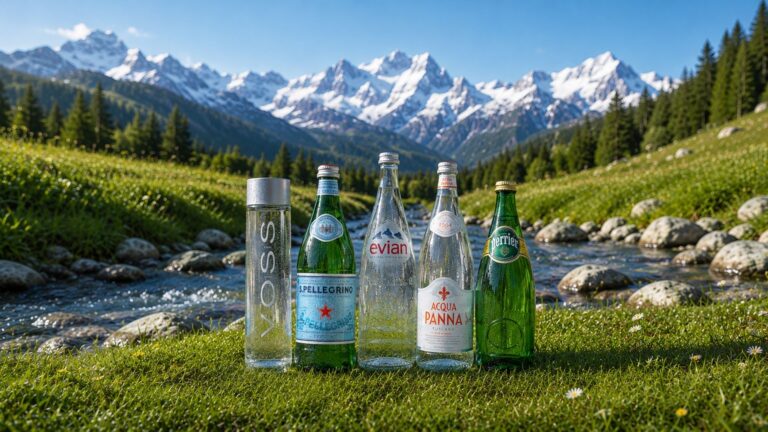
Glass bottled water commands over 52% of the premium water market. It grows at an 8.74% CAGR globally. The brands built on it (Voss, San Pellegrino, Evian, Acqua Panna, Perrier, Hildon) are not newcomers chasing a trend. They are the foundation the premium water category was built on, and they continue to grow because the channel they serve is itself expanding.
We recently explored how aluminum formats are reshaping the retail and events side of the premium water market in our piece on the rise of premium canned water. This article looks at the other half of that story: fine dining, luxury hospitality, and the glass bottle formats and closures that serve those channels.
Glass commands over 52% of the premium bottled water market. It is not the underdog. It is the foundation the entire premium water category was built on.
What Makes Glass the Premium Standard
The dominance of glass in premium water is structural, not sentimental. Glass preserves taste without imparting any material flavor of its own, making it the preferred format for mineral-rich and naturally sparkling waters where the water’s character is the product. San Pellegrino’s distinctive effervescence, Evian’s Alpine mineral balance, Voss’s clean Norwegian artesian profile: all of these taste experiences are best delivered in glass.
Beyond taste preservation, the glass bottle has become a luxury artifact in its own right. Iconic designs such as Voss’s cylindrical form, San Pellegrino’s emerald green, and Hildon’s distinctive bottle shape have become recognizable signals that reinforce brand prestige through visual cues alone. When an upscale restaurant sets a bottle of still water on a table, it communicates something to the guest before a single drop is poured. That communication is deliberate, and glass is what makes it possible.
San Pellegrino’s production facility in San Pellegrino Terme, Lombardy has been expanding capacity over several years to meet sustained global demand from the hospitality sector. The brand’s continued investment in its Lombardy home reflects the commercial confidence that comes with being a standard on fine dining tables worldwide.
The HoReCa Channel: Where Glass Reigns
The clearest expression of glass water’s market position is in the HoReCa channel: hotels, restaurants, and cafes. This is the distribution channel that defines the glass premium water segment, and it operates by different rules than retail or convenience.
In fine dining, premium water is a menu item. Luxury restaurants curate water menus featuring multiple still and sparkling options, presented tableside in glass bottles. The brand on that bottle is a deliberate choice by the establishment, a signal to guests about the restaurant’s standards. Upscale restaurants and hotels have standardized glass bottle presentation for premium water service as a tangible signal of quality. The glass format is not simply preferred in this channel; it is expected.
Glass bottles accounted for 41.87% of total premium mineral water sales in 2025, with hotels, restaurants, and airlines representing a major premium consumption channel. Mountain Valley Spring Water, sold exclusively in glass, has built its entire on-premise strategy around this channel, with revenue in its glass segment rising over 100% year over year. Voss Water has similarly built its brand strategy around ultra-luxury hotels, restaurants, and airline segments.
The hospitality rebound since 2022 has been a tailwind for this channel. As fine dining, business travel, and luxury hotel occupancy have recovered and grown, the demand for premium glass water in on-premise settings has grown with it. The on-trade channel is now one of the fastest-moving distribution segments in bottled water, growing at a 7.10% CAGR as hospitality continues to expand globally.
Fine dining restaurants curate water menus the same way they curate wine lists. The bottle on the table is a deliberate brand statement, and glass is the format that makes that statement possible.
The Brands and the Revenue Behind the Format
The scale of established glass water brands puts the broader premium water category in clear perspective. San Pellegrino and Acqua Panna, both owned by Nestlé, are two of the most widely distributed premium water brands in fine dining globally, commanding $22 to $32 per 12-bottle case at retail and premium pricing multiples in hospitality settings. San Pellegrino’s Lombardy production facility has undergone sustained expansion to keep pace with growing on-premise demand, a signal of the commercial durability the glass format commands in that channel. Mountain Valley Spring Water, sold exclusively in glass, reported glass segment revenue growth of over 100% year over year as HoReCa demand accelerated.
Evian, owned by Danone, holds particularly strong European market share and offers a glass bottle range of 750ml for upscale foodservice and hospitality settings, where the format is selected by operators for its presentation and table service appeal. In 2026, Evian marked its 200th anniversary with a limited-edition glass bottle collaboration with artist Jeff Koons, reinforcing the brand’s continued investment in glass as a premium format for select occasions. Voss Water has strategically focused on ultra-luxury hotels, restaurants, and airline segments to maintain its premium positioning, while also expanding its flavored and sparkling product lines to capture additional consumer occasions.
These are not brands trying to capture a new consumer. They are brands that have been the standard in their channel for decades and continue to grow because the channel itself is growing. The global premium bottled water market was valued at $33 billion in 2026 and is projected to reach $49 billion by 2031. Glass holds the majority of that market: steadily, profitably, and without needing a viral moment to get there.
Closures: The Detail That Defines the Experience
The glass bottle is the visible premium signal. The closure is what makes it functional, and in the premium water category, closure choice is a brand decision as much as a packaging one.
Crown caps are the standard closure for glass-bottled sparkling water and carbonated formats. San Pellegrino’s iconic green bottle uses a crown cap, as does Perrier. The satisfying pop of a crown cap opening signals freshness and carbonation integrity, functional cues that reinforce the premium experience in on-premise settings. For high-volume glass water brands moving through HoReCa and retail simultaneously, the crown cap delivers consistent, reliable sealing at scale.
ROPP aluminum closures are increasingly used in premium still water formats where a resealable, tamper-evident closure is preferred. The ROPP closure offers a clean, refined appearance on glass that reads as upscale, closer to a premium spirits or wine format than a standard beverage closure. For still water brands targeting corporate, airline, and luxury hospitality channels, ROPP delivers the visual and functional cues those buyers expect.
Bar-top corks appear in ultra-premium and artisanal water formats, where the uncorking ritual itself becomes part of the product experience. While niche, this closure type commands the highest per-unit premiums and is used by brands targeting the luxury end of the fine dining market.
For beverage producers entering or expanding in the glass water category, closure selection is one of the first conversations that needs to happen, before the bottle design is finalized and before the HoReCa pitch is made. Capsules & Closures supplies crown caps, ROPP aluminum closures, and a full range of glass bottle closures to food and beverage producers across North America. If you are developing a glass-format water product or expanding an existing line into hospitality channels, that conversation starts here.
A Growing Market With Room for Every Format
The premium water category has room for multiple formats because different formats serve different occasions. Glass water owns the restaurant table, the hotel room, the airline galley, and the corporate boardroom. Other formats serve convenience retail, active lifestyles, and on-the-go consumption. These are different moments and different purchase triggers, and the market is large enough to sustain and grow all of them.
What every premium water format shares is the commercial tailwind of premiumization. Consumers are consistently willing to pay more for water that communicates quality, source, and experience. That willingness to pay is what sustains the category across formats, and it is what is driving the overall premium water market toward $49 billion by 2031.
For suppliers, the takeaway is consistent across formats: the packaging and closure combination is the first brand decision a premium water producer makes, and it determines everything downstream. Getting that combination right from the start is what separates brands that find their market from brands that get stuck between channels.
FAQs
Q: Why is glass the preferred packaging format for premium water in fine dining?
Glass preserves the taste profile of mineral and sparkling water without imparting any material flavor, which is critical for waters where mineral composition and carbonation character are central to the product. Visually, glass signals quality and permanence in a way that other formats do not in fine dining contexts. Premium restaurants use the bottle itself as a tableside service element, and the presentation of a glass bottle communicates brand and quality to guests in a way that other packaging formats cannot replicate.
Q: What closure types are used for glass-bottled premium water?
The three main closure types in the premium glass water category are crown caps, used for sparkling and carbonated formats like San Pellegrino and Perrier; ROPP aluminum closures, used for still water formats targeting premium hospitality and corporate channels; and bar-top corks, used in ultra-premium and artisanal formats where the uncorking experience is part of the product ritual. Closure selection is a brand decision as much as a functional one, and the right closure depends on the channel, the format, and the consumer experience the brand is trying to deliver.
Q: How large is the premium glass bottled water market?
Glass commands over 52% of the premium bottled water market by packaging format share, making it the dominant format in the category. The overall premium water market was valued at $33 billion in 2026 and is projected to reach $49 billion by 2031. Leading glass water brands operate at significant revenue scale, with Nestlé reporting strong growth across its San Pellegrino and Acqua Panna glass formats and Mountain Valley Spring Water recording over 100% year-over-year revenue growth in its glass segment, reflecting the sustained commercial strength of the format in premium and hospitality channels.
About Capsules and Closures
Capsules & Closures, LLC is a leading U.S.-based supplier of lids, crowns, closures, bar tops, cans, and capsules for the food and beverage industry. For questions on sourcing, pricing, or market conditions, contact Capsules & Closures directly.