How to Lock In Packaging Costs When Freight Rates Refuse to Settle
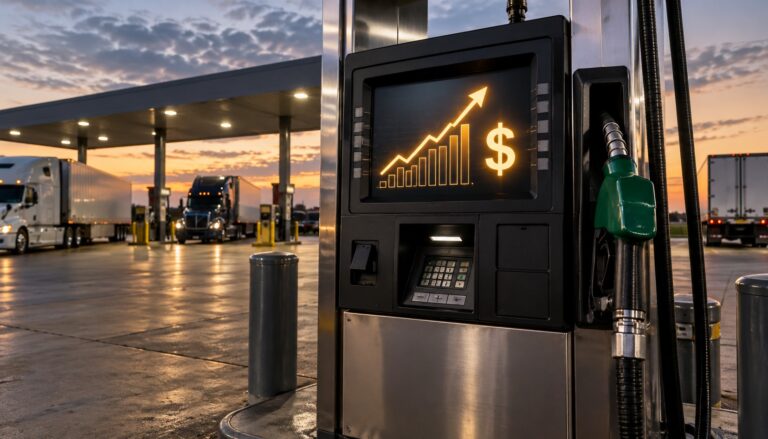
At the United Nations General Assembly last Monday, President Trump told world leaders he believed the United States and Iran would make a deal after the November midterm elections. “Gasoline’s going to drop like a rock,” he told reporters on September 13. Negotiations between the U.S. and Iran have been ongoing since the Islamabad Memorandum was signed in June, establishing a 60-day window to finalize terms. That window expired August 17 without a final agreement, and the conflict has continued since.
The conflict that has kept the Strait of Hormuz disrupted since February is now in its seventh month. A deal after the midterms is possible. It is not scheduled. It is not guaranteed. And it is not a procurement strategy.
As of September 14, 2026, the national average retail price of diesel fuel was $6.285 per gallon, the highest reading in EIA data going back to 1994. That breaks the previous all-time record of $5.81 set in June 2022. Diesel has risen 79.6% since the end of 2025 and is up 68.1% year over year. The gap between diesel and regular gasoline has reached $1.97 per gallon, the widest in the history of EIA tracking, reflecting the specific pressure that refinery capacity constraints and the Hormuz disruption are placing on distillate supply rather than crude oil prices alone.
Dry van freight costs are forecast to finish 2026 approximately 30% above 2025 levels, according to AMB Logistic, followed by another 10% increase in 2027. Reefer contract rates excluding fuel increased 13% year over year. Carrier GRIs of 5.9% have compounded for three consecutive years. Every one of these cost inputs is moving in the same direction, and none of them depend on what happens in November.
Diesel just broke its all-time record at $6.285 per gallon. The gap between diesel and gasoline is $1.97, the widest ever recorded. Dry van freight is 30% above 2025 levels. A deal after the midterms is possible. It is not a procurement strategy.
Why Waiting Is a Strategy With a Cost
The most common procurement response to an uncertain cost environment is to wait. Watch the market. See what happens with the conflict. Hold off on locking in rates until the picture is clearer. Logistics analysts at GoBolt have identified exactly why this approach fails in the current environment: “Carrier rate changes are permanent and cumulative. Next year’s GRI will build on this year’s already-elevated baseline. Waiting for rates to normalize is waiting for something that isn’t coming.”
The logic behind waiting assumes that rates will fall if and when the conflict resolves. That assumption has two problems. First, the conflict has not resolved despite multiple ceasefire attempts, and geopolitical analysts are now modeling a scenario where it continues until late 2028 if no deal is reached after the midterms. Second, even if a deal is struck in November and oil prices fall sharply, carrier rate structures do not reverse immediately. GRI increases stack. Surcharge table adjustments lag oil price movements by weeks. The structural cost increases in labor, equipment, insurance, and maintenance that carriers have absorbed in 2026 do not disappear when diesel prices fall.
The food and beverage sector specifically has been slower than other industries to accept the new cost reality. FreightWaves reported that large CPG and food-and-beverage companies with their own fleets have been leveraging purchasing power to resist increases, with transportation managers noting “a lot of denial in January and February” that gave way to CFO budget adjustments by March and April. The companies that accepted the new environment earliest are the ones with confirmed capacity and contracted rates through Q4. The ones still waiting are paying spot premiums on top of an already elevated baseline.
What Locking In Actually Means in 2026
The freight market has two pricing mechanisms: spot rates and contract rates. Spot rates reflect current market conditions and fluctuate daily. Contract rates are negotiated directly between shippers and carriers for a defined period and volume. In a rising market, contract rates lag spot rates on the way up, which means a shipper who locks in a contract rate today captures today’s price rather than the higher spot price that will prevail when the market tightens further into Q4 and the holiday peak.
The conventional wisdom about contract rates is that they sacrifice flexibility for predictability. In a stable or falling market, that trade-off can cost money. In the current environment, where spot rates are forecast 10 to 15% above 2025 levels for spot-exposed shipments and dry van costs are projected 30% above 2025 overall, the predictability of a contract rate is not a sacrifice. It is the cheaper option.
For beverage packaging buyers specifically, the contract rate conversation is most valuable for lanes that move regularly. Brew Movers, a logistics specialist for the beverage sector, recommends locking in contracts early rather than waiting for seasonal peaks, increasing planning horizons for long-haul shipments, and auditing supply chains for consolidation opportunities. A hybrid approach, securing contract rates for core regular lanes while keeping a portion of volume on spot for flexibility, is the structure most beverage shippers with consistent volume are adopting in 2026.
Contract rates lag spot rates on the way up. A shipper who locks in today captures a rate that will look better by November than it does right now, regardless of what happens with the Iran conflict after the midterms.
The Packaging Component Side: Where Lead Time Is the Lock
For food and beverage producers, freight cost is only one side of the packaging cost equation. The other is the component itself: the can, the can-end, the closure, the crown. These costs are driven by aluminum and steel prices, Section 232 tariffs, and the same supply chain disruptions affecting freight. Locking in packaging component costs requires a different mechanism than locking in freight rates, but the same logic applies.
Section 232 tariffs on aluminum and steel stand at 50% of full customs value for primary metals and finished packaging components. Packaging Dive reported that food and beverage cans remain subject to the 50% rate even after the June restructuring that reduced rates for some derivative products. The Can Manufacturers Institute’s attempt to have filled cans added to the derivatives list for tariff relief was denied. LME aluminum is up 29% year over year. Those costs are baked into every can and can-end produced from imported primary aluminum, and they are not going to reverse if Iran makes a deal in November.
For packaging components, the practical lock-in mechanism is purchase commitment and lead time extension. A producer who places a confirmed order for Q4 and Q1 can production now, rather than rolling orders month by month, captures current pricing rather than the pricing that will prevail when Q4 demand peaks and Q1 planning season begins simultaneously. The aluminum futures market does not offer the same hedging tools to small and mid-size beverage producers that it offers to large CPG companies, but a confirmed purchase order with a domestic supplier has a functionally similar effect.
Indirect packaging costs are the least-examined part of the equation. Packaging industry analysts note that indirect costs account for 15 to 25% of total packaging spend and are the easiest target for immediate reduction. These costs hide in freight charges, storage fees, changeover downtime, and the labor hours spent chasing vendor quotes and coordinating deliveries across multiple suppliers. A producer who consolidates from multiple packaging suppliers to fewer, closer relationships reduces both the indirect cost exposure and the number of separate freight lanes carrying surcharges.
Four Practical Steps for the Current Environment
The following are specific, actionable steps for food and beverage packaging buyers navigating the current freight and cost environment. All four are effective regardless of how the geopolitical situation develops.
First, audit your contracted versus spot freight exposure. Pull the last 90 days of carrier invoices and calculate what percentage of your packaging shipments moved on spot rates. If that number is above 30%, you have meaningful exposure to further rate increases. Identify your highest-volume, most consistent lanes and begin carrier conversations this week.
Second, extend your purchase order horizon on packaging components. If you are currently ordering cans, can-ends, or closures on 4-week cycles, move to 8 to 12 weeks. The inventory carrying cost of holding additional packaging stock is almost certainly lower than the premium you will pay for spot availability in November and December when Q4 peak demand coincides with holiday production runs.
Third, consolidate suppliers where possible. Every additional packaging supplier adds a freight lane, a surcharge event, and a minimum order that may not align with your production schedule. Fewer suppliers with higher per-supplier volume creates better contract leverage and reduces the total number of surcharge-bearing shipments on your logistics invoice.
Fourth, model both scenarios on your cost structure. If a deal is reached after the midterms and diesel falls sharply from its current record levels, what does your contracted freight rate look like versus spot? If the conflict continues into 2027, what does your current procurement approach cost versus a locked-in structure? The answer to the second question is almost always more consequential than the answer to the first.
Capsules & Closures supplies cans, can-ends, crowns, ROPP closures, and the full range of metal packaging components to food and beverage producers across North America. If the current freight and cost environment is affecting your purchasing decisions or your Q4 and 2027 planning, that conversation starts here.
FAQs
Q: What is the difference between spot and contract freight rates for packaging shipments?
Spot rates are the current market price for a single shipment, negotiated at the time of booking and reflecting real-time supply and demand. Contract rates are prices negotiated directly between a shipper and a carrier for a defined period and volume, providing cost predictability in exchange for a volume commitment. In a rising market like 2026, contract rates typically run below the spot rate because they lag market movements on the way up. A food or beverage producer who locks in contract rates for their regular packaging lanes today captures a price that is likely to be lower than spot by the time Q4 peak demand arrives in November and December.
Q: How does the Iran conflict affect food and beverage packaging costs?
The conflict has disrupted the Strait of Hormuz, through which approximately one-fifth of U.S. aluminum imports originate from Gulf Cooperation Council nations. The disruption has contributed to a 29% year-over-year increase in LME aluminum prices and a 68.1% year-over-year increase in U.S. diesel prices, which reached an all-time record of $6.285 per gallon in the week of September 14, 2026, according to EIA data. Dry van freight costs are running 30% above 2025 levels. A potential deal after the U.S. midterm elections in November could reduce oil prices and diesel costs, but carrier rate structures and aluminum tariffs are unlikely to reverse immediately even if a resolution is reached.
Q: What is the most effective way for beverage producers to manage packaging costs in a volatile freight market?
Four approaches have the most direct and measurable impact in the current environment. First, shift packaging component shipments from spot to contract rates on regular, high-volume lanes by beginning carrier conversations now rather than waiting for Q4. Second, extend purchase order horizons on cans, can-ends, and closures from 4-week to 8-to-12-week cycles to capture current pricing and secure supply before Q4 demand peaks. Third, consolidate packaging suppliers to reduce the number of separate freight lanes and surcharge events on your logistics invoice. Fourth, model both a resolution scenario and a continuation scenario on your cost structure so that your procurement plan is not dependent on a particular geopolitical outcome.
About Capsules and Closures
Capsules & Closures, LLC is a leading U.S.-based supplier of lids, crowns, closures, bar tops, cans, and capsules for the food and beverage industry. For questions on sourcing, pricing, or market conditions, contact Capsules & Closures directly.