The Case for Aluminum: Why the Long Game Looks Good
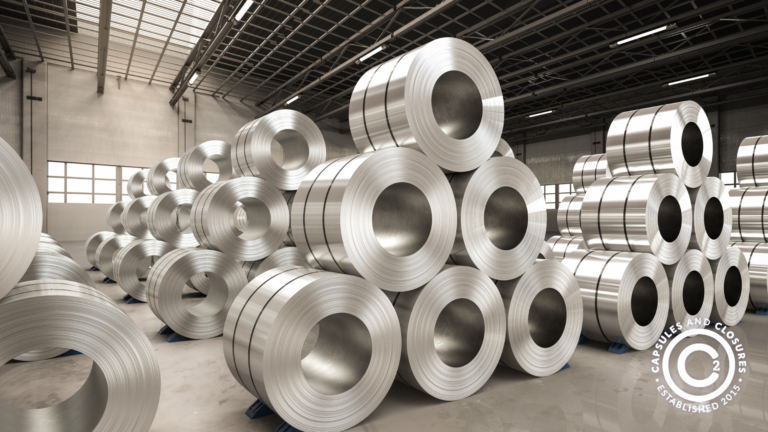
It would be easy, surveying the aluminum landscape in mid-2026, to focus exclusively on the pressures: LME prices hovering near four-year highs, Section 232 tariffs at 50% on primary aluminum sheet, a Midwest Premium that crossed $1 per pound for the first time earlier this year, and ongoing supply disruptions from the Middle East. For manufacturers of cans, caps, closures, and other aluminum-intensive packaging, these are real costs with real consequences.
But a closer look at the structural forces shaping the industry tells a more nuanced — and ultimately more optimistic — story. Aluminum’s long-term fundamentals remain compelling, and several converging trends suggest the material is better positioned than ever to grow its share of the global packaging market.
A Market on a Steady Growth Trajectory
Despite the noise around input costs, the underlying demand picture is constructive. The global aluminum caps and closures market is forecast to grow from $7.4 billion in 2025 to over $9 billion by 2031, advancing at a compound annual growth rate of approximately 3.3%. That may not be explosive, but it reflects a market with durable demand — one built on mature, high-volume segments in beverages, food, and pharmaceuticals, supplemented by newer growth pockets in premium spirits, biologics, and ready-to-drink formats.
In North America specifically, the craft beverage and RTD cocktail boom continues to favor resealable aluminum formats. Brand owners are investing in closure redesigns that combine tamper evidence with premium aesthetics — a value-added segment where converter margins are healthier and price sensitivity is lower. This is not a commodity conversation; it is a design and functionality conversation, and aluminum is winning it.
Sustainability Is Becoming a Structural Tailwind
Aluminum’s recyclability story is no longer just a marketing talking point — it is becoming codified in regulation and supply chain strategy. In Europe, mandatory tethered-cap requirements are prompting brand owners to redesign closures in ways that make aluminum an even more attractive option over plastic. The EU’s Carbon Border Adjustment Mechanism (CBAM) — now in its definitive financial phase as of January 1, 2026 — is creating a distinct premium for low-carbon aluminum, rewarding producers who have invested in renewable-energy-powered smelting.
The long-term emissions math is striking: European Aluminium projections show the industry has already reduced carbon intensity of primary production by 50% since 1990, and is committed to carbon-neutrality by 2050. Recycling is central to that roadmap — aluminum recycling consumes only about 5% of the energy required for primary production. As packaging buyers face growing pressure from retailers, consumers, and regulators to demonstrate circular economy credentials, infinite recyclability becomes less of a differentiator and more of a baseline requirement. Aluminum, uniquely among common packaging substrates, can meet that bar.
Reshoring and Green Smelting Are Gaining Momentum in North America
Paradoxically, the current tariff environment — painful as it is in the short term — is accelerating a structural shift that many in the industry have long advocated for: the reshoring of domestic aluminum capacity. Section 232 duties have tightened local supply and made it economically rational to invest in US-based coil production. Century Aluminum, already the largest producer of primary aluminum in the United States, announced plans to more than double total US domestic aluminum production through its Mt. Holly expansion and a new 750,000-tonne smelter in Inola, Oklahoma, developed with partner Emirates Global Aluminium.
Producers with access to stable renewable energy — hydroelectric-powered smelters in Canada and the Pacific Northwest, for example — are emerging as long-term winners in a market that increasingly prices in carbon cost. For converters and brand owners planning their supply chains beyond the current cycle, this shift toward greener, regionally secure aluminum supply is a development worth watching closely.
Record LME Activity Signals Confidence, Not Just Volatility
It is worth reframing the record trading volumes on the LME seen in Q1 2026. Average daily volume across nonferrous metals contracts rose more than 25% year-on-year — the exchange’s highest-ever quarter. LME CEO Matthew Chamberlain noted the results mark “the beginning of a new phase of growth driven by our electronic market enhancements.” The instinct may be to read record volumes as a sign of market stress. But high liquidity and trading depth also reflect the confidence of a broad range of market participants in aluminum as a reference asset. The LME’s ability to provide hedging tools out to ten years means that converters and buyers can, in principle, lock in cost visibility through the current period of volatility. That is a risk management opportunity, not just a risk.
The Longer View
The near-term environment for aluminum packaging is undeniably challenging. Cost pressures are real, and manufacturers will need to manage margins carefully through 2026. But the industry has navigated commodity cycles before, and the structural case for aluminum — recyclability, lightweighting, design versatility, and growing regulatory alignment — has not been stronger than it is today.
Companies that use this period to invest in sustainability credentials, strengthen domestic supply relationships, and move up the value chain into premium formats will be well positioned when the cycle turns. The headwinds are real. So is the opportunity
About Capsules and Closures
Capsules & Closures, LLC is a leading U.S.-based supplier of lids, crowns, closures, bar tops, cans, and capsules for the food and beverage industry. For questions on sourcing, pricing, or market conditions, contact Capsules & Closures directly.